Bird Copenhagen is a music bar. Music is the theme. That doesn’t sound particularly groundbreaking, but building a bar with a proper theme is harder than it looks.
Opening a bar that does music is easy. Buy some records your customers will recognise, and some they don’t so they know for sure that you’re cool. Put a neon lyric on the wall. Use records as set dressing. Name a cocktail after a Fleetwood Mac song then roll your eyes when people like it. Claim a saxophone solo as a garnish. Suggest a drink that “tastes like bebop”. Voilà, you have a joyless temple to expensive hi-fi.
At Bird, the idea reaches choices you might never consciously notice. It shapes the acoustics, speakers, furniture, turntables, mixer, cocktail production and the amount of noise made by the people preparing drinks. Even the removal of the cocktail shakers can be traced back to it.
This is why Bird is more than a bar that has records. Here, the theme makes contact with operations and not only survives. It thrives.
Welcome to Bird
Build from the reason, not the props
Bird describes itself as a small neighbourhood bar. Music matters, but so does conversation. Nobody is required to sit in reverential silence while a man in very serious trousers plays a Japanese pressing of A Love Supreme.
For Bird co-founder Peter Altenburg, a bar’s identity should grow from its reason for existing.
“I believe that identity is something you build up along your reason for doing what you do. If people believe your ethos (your WHY), I am very sure that WHAT you do will resonate with that identity and make your patrons understand that identity easier.”
The reverse is also true. If nobody involved can explain why the bar exists beyond an aesthetic, customers will eventually notice.
Altenburg’s advice to other operators is to invest in acoustics rather than spending heavily on antique audio equipment. None of the equipment at Bird was selected purely because it looks the part.
Speakers that speak to you
Copenhagen-based company Arda Audio designed Bird’s speakers and helped the team select its acoustic treatments. The system was then installed and calibrated for the rooms, working alongside wall panels, furniture and materials chosen partly for how they absorb or reflect sound.
Altenburg says hearing the speakers convinced the team that Arda Audio understood what Bird needed. The decision was not simply about buying an impressive set of speakers. It was about making the entire room work with them.
The other equipment follows the same principle. Technics 1210 turntables are famously robust machines made for regular use, not ornamental antiques. A rotary mixer gives DJs smooth, tactile control over the music, while horn speakers reproduce high frequencies efficiently and help the sound carry through a busy room.
Too many themed venues buy the visible symbols of a culture and skip the infrastructure that made it interesting in the first place. Bird borrows from Japanese kissa culture, it doesn’t rigidly create a set of a Tokyo basement from 1973. Historical accuracy matters less than whether the bar sounds good, functions properly and remains an enjoyable place to spend an evening.
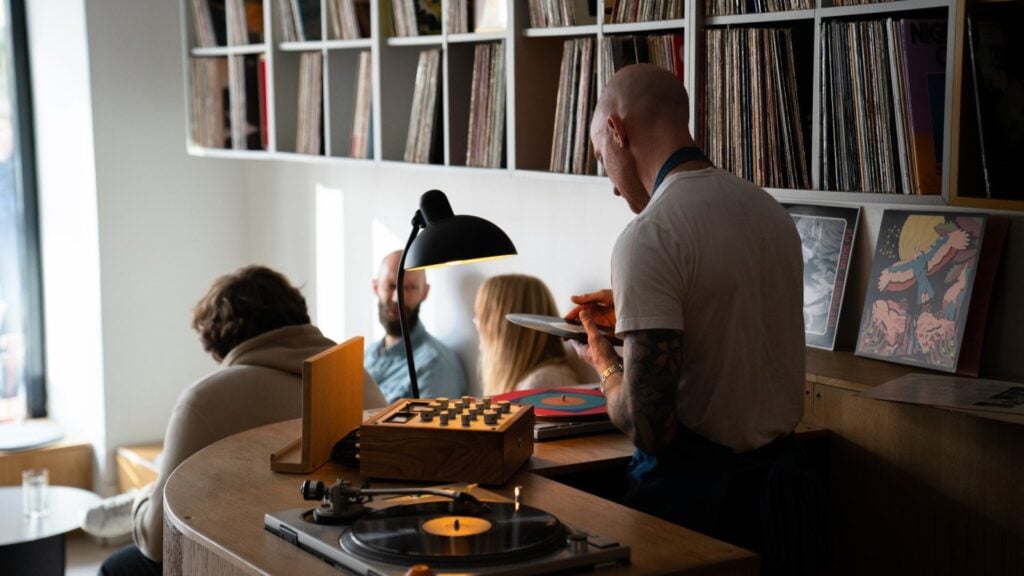
A bar with a theme, done well.
Why Bird took away the shakers
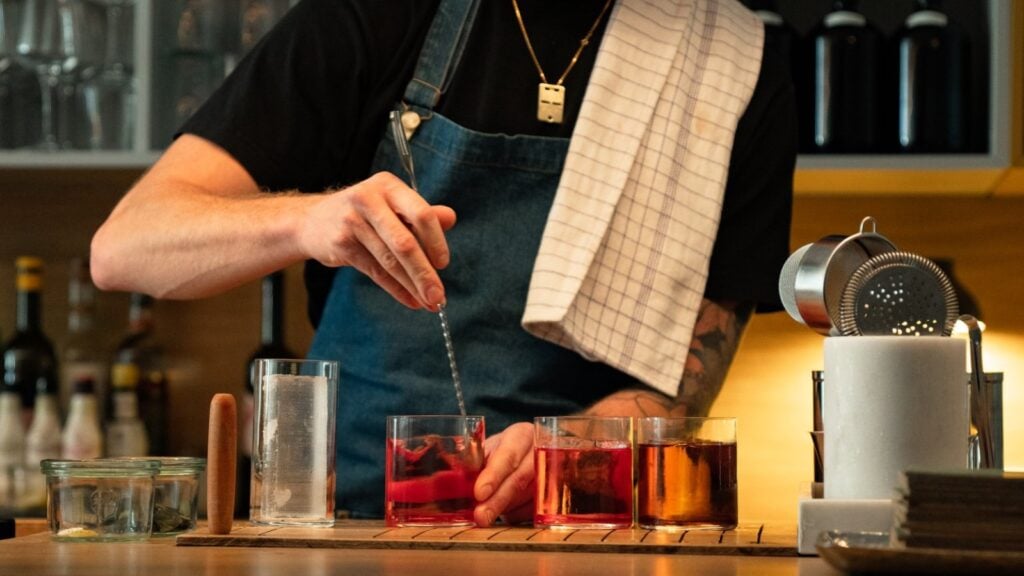
The clearest example of Bird’s theme affecting its operation is also on paper the strangest: it removed the cocktail shakers from the bar.
Shaking is part of the theatre of cocktail service. During cocktail competitions, the audience will clap when a bartender shakes. It’s our little moment to shine. It looks cool, it draws attention. It is loud.
Too loud for this Bird. The team therefore prepares most of its cocktails in batches before service. Ingredients are measured and combined in advance, allowing bartenders to pour the completed drink quickly and consistently without shaking each order beside the guests.
Altenburg is not opposed to shaken cocktails. He says they have every right to appear in bars where the music does not require the same degree of attention. At Bird, however, removing the shakers reduced unnecessary noise while also making service faster and the drinks more consistent. An operational decision that supports the music, the cocktails and the speed of service at the same time.
According to Altenburg, the team applies the same thinking to the ordinary clatter of hospitality. Coffee machines, glassware, ice and preparation can all compete with the sound system. Silence is neither possible nor desirable in a sociable neighbourhood bar, but unnecessary noise can be designed out.
Cocktails closer to wine than lemonade
Bird’s approach to drinks follows the same logic. Cocktails are generally pre-batched, spirits remain central, and fresh citrus juice or refined sugar is rarely added simply to make a recipe balance.
“We like to think of cocktails or different drink styles as a glass of ice-cold wine,” Altenburg explains.
By that, he means Bird wants its drinks to have the structure, aroma and texture of wine rather than the immediate sweet-and-sour refreshment of lemonade.
Altenburg believes citrus juice and sugar are too often treated as corrective tools. If a drink is too strong, too dry or otherwise out of balance, a bartender can “fix it” with lemon, lime or syrup. Bird uses citrus when its flavour is integral to the drink, not because cocktail convention demands that every recipe contain juice and sugar.
Fortified wines, dessert wines and fruit wines. This is what contributes to sweetness, acidity and aroma at Bird, all while allowing the character of the base spirit to remain clear. Fresh fruit may also be used in infusions, where it can add flavour without introducing juice directly into the finished cocktail.
The Shiso
The Shiso demonstrates how that thinking works in the glass. It combines Bird’s house Japanese whisky blend with a small amount of umeshu and shiso-infused blanc vermouth.
Bird’s whisky blend includes a small proportion of Cognac, which Altenburg says introduces more European oak character. The umeshu supplies fruit sweetness and a little acidity.
To make the final component, the team infuses 15g of shiso leaves into every 1,000g of blanc vermouth for 48 hours at room temperature. The completed cocktail is chilled below -10°C and served without ice in a thin-rimmed wine glass.
It can also be lengthened into a Whisky Highball with highly carbonated soda and a tall column of ice in a Collins glass.
The Shiso is recognisably a Bird cocktail because of the way it was developed and served, not from forcing every ingredient to perform a little routine about jazz.
Development as a daily routine
Bird’s menu does not change wholesale every month, as sometimes reported. New drinks are introduced monthly, while development continues almost every day in the kitchen, lab and production spaces.
Rather than beginning with a base spirit, classic cocktail or predetermined flavour, the team develops ingredients. Infusions, fermentations, distillations and other preparations are tasted to find out what works together. Research and development is rooted in documentation and repetition.
“We constantly try to develop the character or scope of an ingredient or a flavour component,” Altenburg says. “Our R&D is a constant process that spurs creativity because it is formed on documentation and repetition.”
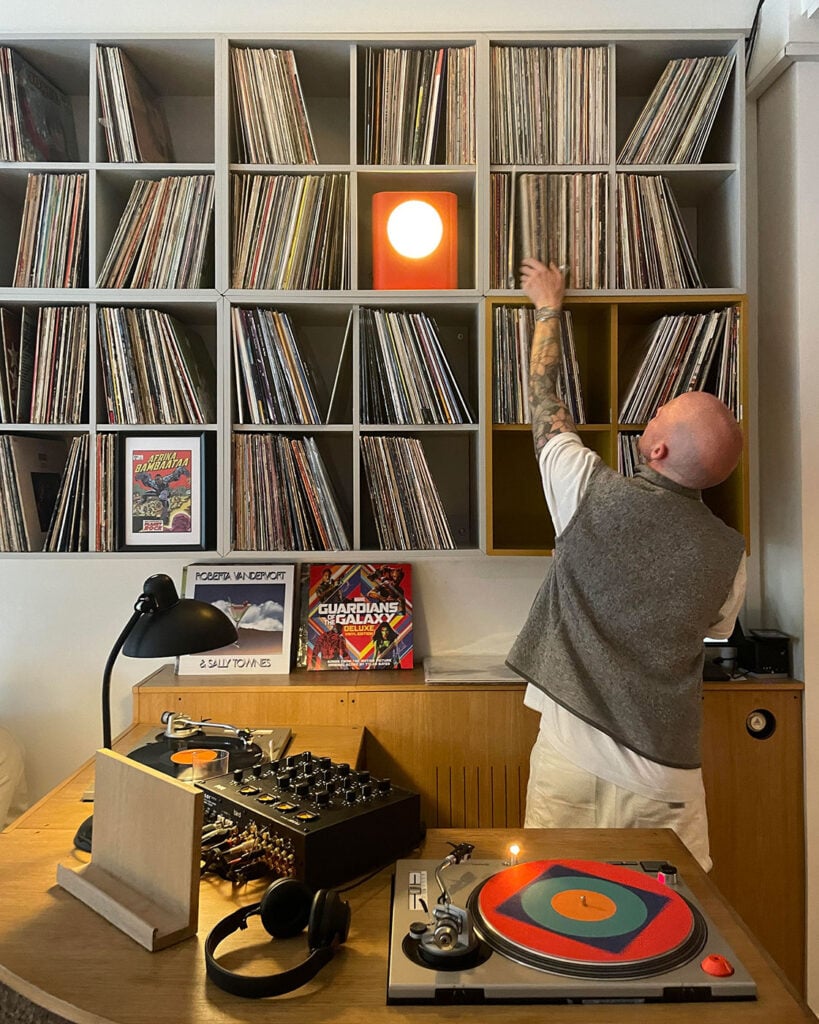
Quite the vinyl collection.
Charlie Parker, Bronski Beat and reading the room
Bird takes its name from jazz saxophonist Charlie Parker, whose nickname was Bird. Though Altenburg does not believe the name should dictate everything played in the bar. He sees Bird’s musical character running through numerous genres. Depending on the evening, a set might move well beyond jazz and reach the synth-pop of Bronski Beat.
“We are not a jazz bar. We are a bar with music. It is more about the feeling and the quality of the music than the genre. We want people to discover music,” Altenburg explains. “We don’t want to teach them or make them feel that they need to know something before they come in.”
Bird wants guests to respond to the person selecting the records. “The DJ is important because you can feel that somebody has chosen this music,” he says. “It is not just a playlist.”
The bar describes its policy as accommodating but not populist. DJs are trusted to have a reason for their choices while remaining capable of reading the room. “We don’t have many rules,” Altenburg says. “We trust the DJs, but they also have to understand that they are playing for a room full of people.”
The right side of reverence
Sometimes the technically correct set is simply wrong at 10pm on a Saturday. Across more than 500 DJs during Bird’s first five years, Altenburg estimates this has happened on only four or five nights.
“Most of the time, the DJs understand the room. But sometimes you have to talk to them and say, ‘Maybe this is not the right direction tonight.’”
The team may speak to the DJ when necessary, but the occasional imperfect evening is the price of giving genuinely different people control of the turntables. “You cannot control everything,” Altenburg says. “If you want different people to play, you have to accept that sometimes it will not be perfect.”
That broad policy also keeps Bird on the right side of reverence. Dedicated listening sessions take place as special events, but the everyday business is running a social neighbourhood bar.
“We are a bar more than a listening room,” Altenburg says. “In our culture, I find it hard to believe a dogmatic listening bar would be very sustainable.”
Guests have nevertheless engaged with the music more deeply than he expected. Human presence matters. A record has been chosen and put on by somebody standing in front of them, whose subjective taste becomes part of the evening. It is the opposite of surrendering the room to a playlist assembled to offend nobody.
A theme should make difficult decisions easier
Bird was named No.24 in Europe’s 50 Best Bars 2026, where it was also named the Best Bar in Denmark. This has brought more international visitors and, in Altenburg’s words, more flashy cameras. It has not forced Bird to abandon the neighbourhood-bar feeling. The team still talks to guests and tries to make them part of what the bar is doing.
“That’s our sauce, I guess,” he says.
A theme should function as a decision-making system. It should help an operator decide what to buy, what to remove, where to spend money and what to leave alone.
At Bird, the central idea explains why the sound system is modern rather than antique, why the cocktails are batched, why citrus is used selectively, why DJs are given freedom and why the shakers had to go.
Customers will not consciously clock every one of those decisions. They do not need to. They experience the accumulated result as a bar that knows what it is.
The alternative is a collection of props waiting for an Instagram caption. Anybody can put records on a wall. Building a bar that listens to its own idea is much harder.