For Kelvin McCabe, beverage director at Eve Bar and the Adam Handling Collection, a new bar menu should not begin with a list of drinks. It should begin with the room.
“Every menu needs to reflect the identity of the venue, so the first question is always: what story are we trying to tell and how do the drinks support that?”
Eve sits beneath Frog, Adam Handling’s Michelin-starred restaurant, and its latest redesign has brought the two spaces closer together.
That relationship now shapes the way the bar thinks about drinks, service, flavour, and atmosphere.
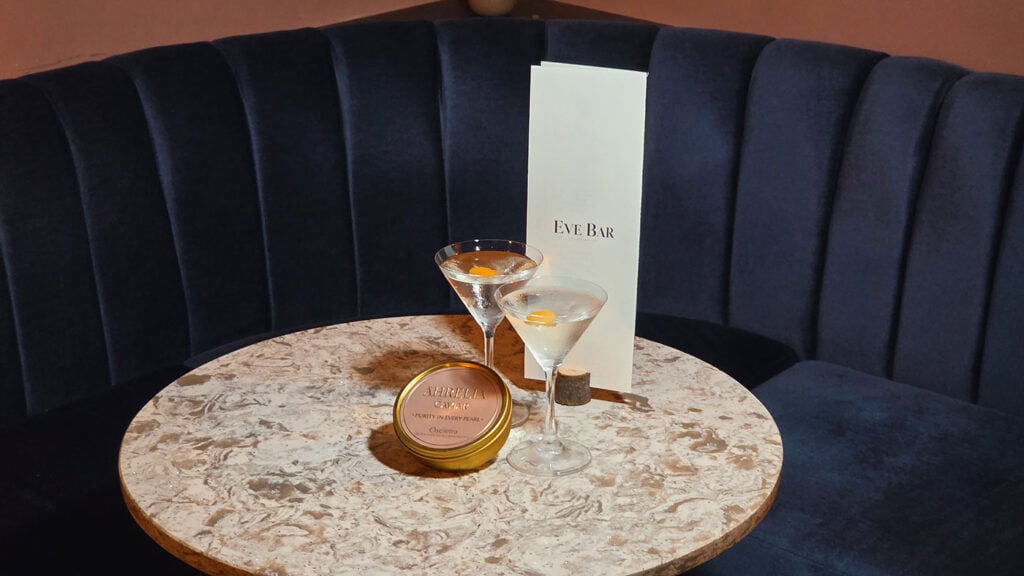
Eve Bar has a new bar menu. But what’s the secret to making it a success?
Start with the concept
When creating a new menu, he starts with what he wants guests to experience when they walk through the door.
“Eve sits directly beneath Frog, Adam Handling’s Michelin-starred restaurant, and with the recent redesign we’ve leaned into that connection even more. The bar now feels like a natural extension of the restaurant, so the drinks offering needs to reflect the same attention to detail, quality of ingredients, and overall guest experience. We want guests to feel that connection between the two spaces while still giving Eve its own personality”.
“Our latest menu is built around The Three Cs: Caviar, Champagne, and Cocktails. The entire drinks programme was designed to complement that sense of indulgence while still feeling playful, approachable, and unmistakably Eve. From the Martini menu and caviar pairings to the signature cocktails and food offering, everything is designed to work together as part of one cohesive experience”.
“From there, it’s about creating drinks that fit the concept and give guests a reason to choose Eve over anywhere else. Every cocktail should feel connected to the overall experience, whether that’s through flavour, presentation, or the way it interacts with the wider menu. The goal is to create something that feels true to the personality of the bar”.
Who is the menu for?
McCabe sees the menu as a balance between guest expectation and creative ambition. The team has to make drinks that feel distinctive, but not disconnected from the people actually ordering them.
“In hospitality, the menu is ultimately created for our guests, while also taking into account the creativity of the team and the craft that goes into making each drink. A great cocktail menu isn’t about copying trends and what others are doing or only giving people what they expect. People want more now. However, there should always be a strong connection to our guests and their preferences and at the end of the day, the cocktail has to resonate with them”.
That also shapes what earns a place on the list.
“A good cocktail has to be balanced, delicious, and fit with the seasonality and style of the menu. There’s no point putting a heavy, Old Fashioned-style drink on a menu as a highlight in the height of summer. It simply doesn’t fit. The most important thing is that the balance works and that the drink aligns with the ethos of the menu for that particular release”.
Who is the menu for?
So, how do you balance originality with drinks people will actually order? Eve separates its signature menu from its classic serves. The signatures give the bar space for innovation, while classics remain available for guests who want something more familiar.
“We’re fortunate because we have a clear distinction between our signature menu and our classics. Our signature serves are where the creativity and innovation from Eve Bar’s lab really come to life, while alongside that we also offer more classic-focused menus. Our current one is very Martini-led. If guests want something more traditional, we’re always happy to make the classics”.
“The lab gives us the freedom to explore new flavours, techniques, and ingredients in a way that wouldn’t be possible behind a standard back bar. Using equipment such as our rotovap, ultrasonic homogeniser, and other specialist tools, we can experiment with distillation, extraction, infusion, and texture to create flavours that feel unique to Eve. The fact that guests can see directly into the lab also makes it part of the experience and allows them to see some of the work that goes into developing the drinks”.
The drink matters most
Although, as McCabe points out, originality only matters if people actually want to drink the cocktail.
“No matter how technical or innovative a serve is, it still has to be balanced, delicious, and approachable. The lab isn’t there to create drinks that are complicated for the sake of it. It’s there to help us create better drinks and deliver flavours that guests can’t easily find elsewhere”.
“When it comes to balancing a menu, we’re looking at a mix of long drinks, short drinks, lighter serves, and stronger cocktails. It’s about having a range so you’re catering to whatever people are in the mood to drink at that given moment. Ultimately, menu development always comes back to balance”.
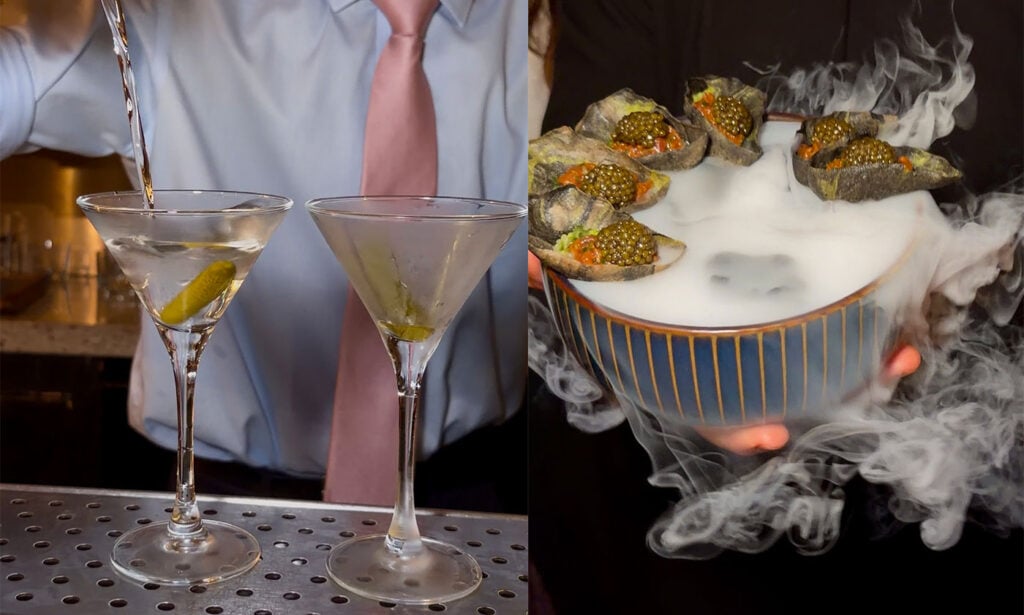
The new bar menu is built around The Three Cs: Caviar, Champagne, and Cocktails
Building flavour and seasonality without forcing it
Seasonality matters, but McCabe does not treat it as a rule that overrides flavour. The drink has to work first.
“Nothing should ever feel forced. We start by deciding what role each cocktail needs to play on the menu and what style of drink we’re trying to create. That might be a long refreshing serve, a spirit-forward cocktail, or something lighter and more approachable. Once we’ve established that, we start thinking about the flavour combinations and ingredients that will help us achieve that goal”.
“Seasonality can absolutely influence those decisions, but it shouldn’t dictate them. Sometimes you might have a flavour combination in mind that works perfectly with peaches, for example, but peaches aren’t in season. If blueberries happen to be available instead but don’t work with the other flavours or the style of drink you’re trying to create, then we won’t force them into the cocktail just because they’re seasonal”.
“For us, it’s about building balanced drinks first and then finding the right ingredients to support that vision. The concept, flavour profile, and overall balance of the menu always come first. If an ingredient naturally fits, that’s great. If it doesn’t, we’d rather adapt the flavour profile than compromise the quality of the drink”.
“We also have to think about the wider menu. If we’ve already approved a vodka cocktail, a gin cocktail, and a long refreshing serve, there’s no point forcing another drink into the line-up if it throws the overall balance off. Every cocktail needs to earn its place and contribute something different to the guest experience”.
Cost, prep, and speed of service
A cocktail can taste brilliant in development and still fail operationally. Service speed, preparation time, and consistency sit at the centre of menu design.
“Preparation time and service speed are huge considerations. If a drink is too prep-heavy, we’ll often replace it”.
“Again, it’s about balance, having some cocktails that require more preparation and deliver greater complexity, alongside others that are quick and efficient to serve. If you’re offering a spritz-style drink with a pre-batched component, it’s easy to prepare and you know it’s likely to be popular, so we try to make that process as efficient as possible”.
“We also consider the lead time involved in preparation. If a cocktail is extremely popular but requires three or four days of prep work, that’s something you need to think carefully about in a high-volume venue, and of course this needs to be reflected cost-wise. We have team members dedicated to batching, which helps, but we’re always balancing preparation time, costs, production schedules, and service requirements. Speed of service while keeping top quality and consistency remains incredibly important”.
What role does the team play?
Menu development also works as training. Eve brings the wider bar team into the process so bartenders understand how drinks are built, balanced, tested, and improved.
“We always encourage our bartenders to contribute ideas for new menus. In fact, we almost insist on it because it’s important that they understand the entire creative process and for their training and progression”.
“We involve them in the initial training sessions, where we assess balance, identify what’s missing from a drink, and discuss how it can be improved. That might involve looking at freshness, bitterness, sweetness, texture, or mouthfeel”.
“The whole team is involved so that everyone understands the process and develops their skills”.
How much does storytelling matter?
Eve’s latest menu has moved away from long written stories for each drink. The storytelling now sits in the design, the concept, and the interaction between bartender and guest.
“Cocktail names can absolutely grab someone’s attention, and storytelling remains a hugely important part of menu design. The key is understanding where that storytelling happens and how your guests want to engage with it”.
“Interestingly, we’ve actually moved in the opposite direction recently and stripped our physical menu back. For our latest menu, we’ve focused on cleaner layouts, simpler descriptions, and strong visual design rather than lengthy written stories for every drink”.
“That doesn’t mean the storytelling has disappeared. It’s simply moved. Rather than every cocktail carrying a long narrative on the page, the story sits within the menu as a whole and the wider experience. The concept, the illustrations, the caviar and Champagne pairings, and the overall sense of indulgence all contribute to that narrative”.
Engaging the guests
McCabe feels this approach creates more opportunities for our team to engage with guests directly.
“Our bartenders are trained on every signature cocktail, how it was developed, and the thinking behind it, so the storytelling becomes part of the conversation rather than something guests have to read from the menu. That interaction often feels more personal, more engaging, and ultimately more memorable”.
“Previous menus featured extensive stories, illustrations, and some quite unusual names, and those worked well for the concept at the time. Both approaches can be successful. You just need to understand your guests, gather feedback, and determine what fits your venue. For us right now, a cleaner menu paired with stronger guest interaction feels like the right balance”.
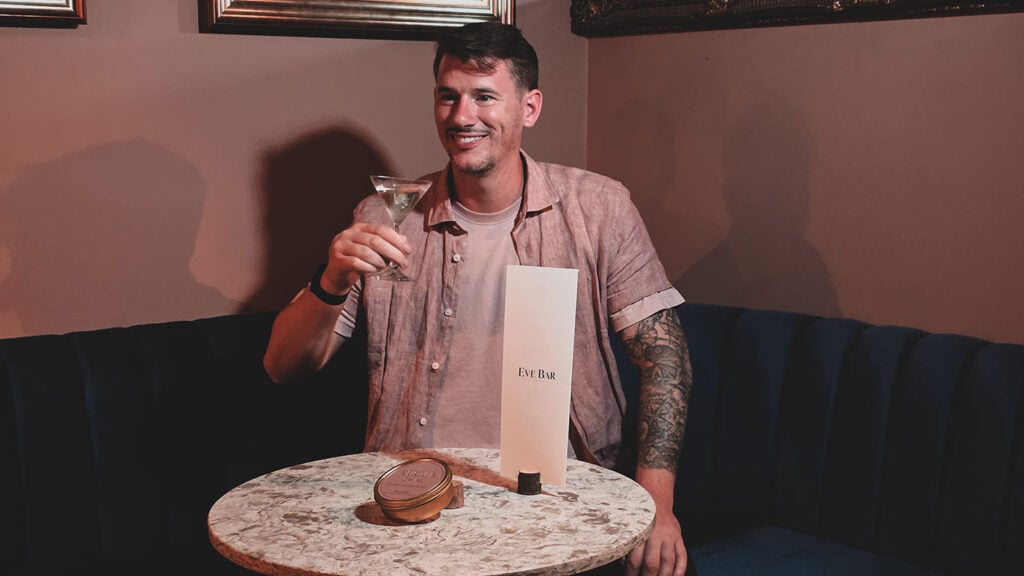
What’s your favourite recent new bar menu launch?
What stays, what goes on a new bar menu
An important skill is understanding which drinks deserve longevity and what gets quietly taken outside and shot.
“Some drinks will always sell more than others, but because of the tasting process and the amount of time we spend balancing cocktails, there shouldn’t be anything on the menu that genuinely needs to be removed because it’s poorly conceived”.
“We also evaluate presentation and garnish carefully. There may be a less popular drink here and there, but nothing should look or taste so poor that it needs to come off the menu entirely”.
McCabe says the classics still dominate – Mojitos, Espresso Martinis, Cosmopolitans and similar drinks, but that it’s not his place to tell people what they should drink. Guest choice is always the most important thing.
Common mistakes, red flags, and the unglamorous bits
The clearest risks are poor balance across the list, weak variety, vague premium language, and menus that lack personality.
“Sometimes a lack of variety can be an issue. Not properly balancing long drinks, short drinks, and stronger serves can become a weakness”.
“Of course, mistakes happen. Every menu may have one or two drinks that move more slowly than the others, the Marmite cocktails that divide opinion. But even those drinks should still be balanced and well-executed”.
But the big new menu red flag that raises alarm bells for McCabe is a lack of originality or personality.
“If a venue is simply serving the basics, relying entirely on major brand partnerships, and hasn’t put much thought into the drinks themselves, that can be disappointing“.
Pricing, positioning, and process
Pricing also matters.
“Guests should feel they’re receiving premium ingredients and premium quality when they’re paying premium prices“.
A further pet peeve of McCabe’s is bars labelling drinks as “premium” or “aged” without putting the necessary thought, quality, or execution behind those descriptions, adding “Those terms should mean something“.
As for the hardest part of cocktail development, that’s the tasting process itself.
“There are days when you’re working through eighteen or twenty cocktails at ten o’clock in the morning, then moving straight into a full day of meetings and evening service. Those days are intense!“
Short vs big menu and the drink you need to learn to make properly
Any fan of Kitchen Nightmares knows that Gordon Ramsey loves a small menu. Focus on what you do well, keep operating costs lower, don’t overwhelm the customer. For McCabe, the big vs small menu debate depends on the operation.
“If you have two bartenders serving one hundred covers, then a concise, focused menu may be the better option. If you have a larger team and more time to prepare and explain drinks, then a broader menu can work just as well. There isn’t a universal answer – it has to suit both the venue and the team“.
Finally, whatever is on your new menu, there will never be a substitute for being able to make the classics.
“Bartenders should also be able to stir a Martini properly, so the dilution is good and the drink is in harmony, and of course you have to make a Negroni consistently and correctly“.
“Personally, I love drinks such as the Last Word, the Hanky Panky, and the Martinez. I don’t think there’s one definitive, but I think all bartenders need to understand the classics and make sure that balance is delivering“.
We’re always interested in hearing about new launches, producer stories, category insight, venue news, and trade ideas worth sharing. If you’ve got something our buyers, bartenders, retailers, or drinks industry readers should know about, get in touch by emailing content@masterofmalt.com.