What is the state of the drinks industry in 2026? Nick Gillett, managing director of Mangrove UK joins us to give us the lowdown.
The drinks industry loves a euphemism. Challenging trading conditions. Softening demand. Market correction. Headwinds. All those polite phrases that usually mean everyone is working harder, making less, and wondering who moved the good years.
In 2026, the picture is complicated. Bars still need to fill seats while energy, rent, wages, and supplier costs keep climbing. Brands need to justify their place on shelves in a market where choice has never been wider, while buyers are more cautious, consumers more selective, and all craft/premiumisation stories are harder to believe. Distributors have to balance ambition and reality, making the whole thing work without mistaking noise for growth.
But the industry has not stopped moving. Far from it. People still drink, explore, ask questions, and occasionally fall in love with a bottle for reasons no spreadsheet can fully explain.
To understand where things really stand, we spoke to Nick Gillett, managing director of Mangrove UK. The premium spirits importer and distributor manages over 40 premium global brands in the UK. It has recently added organic, sustainable whisky pioneers Nc’nean to the fold. The company’s position is close enough to the trade to feel the pressure, close enough to brands to know who is genuinely growing, and close enough to consumers to see what people actually buy once the trend decks go back in the drawer.

Say hello to Nick Gillett, managing director of Mangrove UK
The State of the Drinks Industry in 2026
Question. Everyone talks about the drinks industry being “challenging” right now. What does that actually mean on the ground in 2026?
Nick Gillet: “It means different things depending on where you sit. For operators, it’s energy costs, employment costs and footfall that hasn’t fully recovered. For brands, it’s a wholesale tier that is becoming more selective and a bar buyer who, in many cases, is now an accountant rather than a product enthusiast. As for distributors, it’s the compounding effect of all of that — tighter margins, harder conversations and a market where getting a brand properly represented takes significantly more effort than it did even three years ago.”
“The caveat I’ll give is this — any market that is sorting itself out is challenging. But there’s still a really vibrant industry here. There’s still space for the best operators and the best brands to do well. The question is whether you’re on the right side of that split.”
Q: Mangrove is growing while a lot of the industry feels flat or nervous. What are you seeing that others perhaps aren’t?
NG: “Partly it’s the quality of our brand partners. The vast majority are seeing genuine uplift and that’s not by accident. We’ve worked hard to find partners with real liquid quality, real founder commitment and all the signals that suggest staying power. Another part is the backing of GBH, which gives us the financial stability to invest ahead of the curve rather than react to it.”
“We’ve doubled our sales force, invested in systems, increased capacity and we could only do that with group support. But honestly, the final piece of the puzzle is our love of the industry. Even in a contracting market, we’re not chasing volume, we’re building brands. That focus, combined with some talented people and a clear sense of what we’re trying to do, keeps us moving forward even when the broader mood is nervous.”
Q: Premiumisation drove the industry for years. Has that bubble burst, or are consumers simply becoming more selective?
NG: “The bubble hasn’t burst — but the mass stampede has slowed. What we’re seeing is a more considered version of the same drivers. Consumers are making more deliberate choices and, if anything, when people do trade up, they’re doing it with more thought and more conviction. They may be drinking less overall, but what they’re drinking matters more to them.”

Nc’nean has recently joined the Mangrove stable
Q: What are people actually drinking more of right now, versus what the industry wishes they were drinking?
NG: “Non-alcoholic is in real growth, as are flavour-forward trends — limoncello, elderflower and the whole cocktail culture behind those. All things agave are still having their moment. Brandy has quietly been doing well for us and some of the world whiskies in our portfolio have performed incredibly. And once again leaning into convenience, RTDs continue to grow.”
“What the industry perhaps wishes was happening is a clean, predictable premiumisation story; one category leading clearly and everything behind it. The reality is messier. People are drinking a bit of everything, habits are shifting and some of the categories that dominated recent years are starting to slow.”
Q: How much has consumer behaviour changed since the pandemic boom years?
NG: “Significantly, but not in the ways people expected. Consumers are more discerning. They’ve realised they don’t need fifty gins, they want fewer, better options. The thirst for knowledge and understanding is actually greater now than it was pre-pandemic; people are more curious about what they’re drinking and why.”
“What’s changed is the context they explore within. Disposable income is under pressure, so the considered purchase has replaced the impulsive one. And that’s actually an opportunity for quality brands, if you can meet the consumer at that level of engagement.”
Q: Sustainability has become a major talking point. In your view, do consumers genuinely prioritise it, or is flavour and price still king?
NG: “When all things are equal, consumers will choose the more sustainable option. But the critical phrase is all things being equal. Sustainability cannot come at the expense of liquid quality or commercial sense. Slapping a sustainability badge on a poor product isn’t a strategy.”
“What concerns me more is what’s happening at the venue and operator level. Businesses that were vocally committed to sustainability two or three years ago have quietly walked away from it as financial pressures have mounted. That’s a decision being made above the consumer’s head and I think it’s a shame.”
“Sustainability genuinely changed things in this industry (packaging, production, logistics) and some of that change has been lasting and positive. I don’t think it will ever disappear entirely. But right now, it’s less front-of-mind than it was and not because consumers stopped caring, but because times are tougher.”
What’s the potential of no-and-low? We get the no-and-low-down
Q: You’ve said Mangrove focuses “liquid first”. Has the industry drifted too far toward branding, scarcity, and marketing narratives?
NG: “In some parts, yes. I am someone with an enormous respect for great branding but there are products out there that are effectively white-labelled, built around a marketing narrative rather than a distillery or a liquid or a provenance story. There are claims being made that aren’t true, cultural misappropriation dressed up as authenticity and a lack of transparency around production that the industry should be embarrassed about.”
“The scarcity game around certain Scotch expressions, for example, has become a bit ridiculous. I’m not against marketing. I’m not naive about how brands are built. But if consumers started asking harder questions, some parts of this industry would struggle to answer them. We have always been liquid first at Mangrove and I’m a firm believer that sets us apart.”
Q: What separates brands that are thriving in 2026 from the ones quietly struggling?
NG: “Budget is part of it. Those that can invest in protecting market share and doing interesting activations have an advantage and that’s just the reality. But money alone isn’t the answer. Quality of distribution matters enormously; there are genuinely good brands out there that are struggling simply because they have the wrong partners. And then there’s the founder dimension — the passion, the commitment, the understanding of what their brand actually stands for.”
“The brands quietly failing are often the ones that launched on trend momentum alone, or that assumed distribution would do the brand-building for them. The ones thriving tend to have real liquid quality, a clear identity, supportive partners and people behind them who genuinely care. And believe me — that combination is rarer than you’d think.”
Q: Where do you honestly think the biggest growth opportunities are over the next five years?
NG: “RTDs and non-alcoholic will continue to grow, especially at the quality end of both, not the flood of mediocre entrants. New World whiskies are genuinely exciting; the liquids are great and the stories are compelling. Rum has quiet momentum. And I have a feeling vodka is due a comeback.”
“But one standout category I’d watch closely is sake. It fits the lower-ABV, cleaner drinking moment that’s building; it has a compelling story; and the column inches being written about it right now remind me of where Mezcal was a few years before it properly broke through. We’re seeing the early signals. Whether sake follows that trajectory I can’t say with certainty, but it feels like it’s on the cusp of something significant (and it’s a firm favourite tipple of mine too!).”
Q: If you were launching a completely new spirits brand tomorrow, what would you absolutely avoid doing?
NG: “Jumping on a bandwagon. If you’re launching a Tequila or a celebrity partnership right now, you are late to the party – and a very crowded party at that. I’d also avoid chasing validation from the big global groups; their appetite for brand acquisition has diminished significantly and most of them are sellers rather than buyers right now.”
“What I’d say more broadly is: unless you have the best liquid, the biggest budget, or the lowest cost of production, there’s probably someone who can do what you’re doing better than you. The bar for entry has never been higher. If it’s a passion project and you understand that, go for it. If you think it’s a route to making serious money in a short timeframe, I’d take a long, hard look at the odds.”
Not just another example of spirit copy with no alcohol
Q: Has social media made the drinks industry more informed or just louder?
NG: “More complicated is probably the honest answer. It’s made information more accessible, which is great for all of us who value education and discovery in the industry. But it’s also made the validity of that information much harder to assess. Anyone can have an opinion; anyone can say anything. And some brands have learned to use that to their advantage.”
Q: Do younger consumers still aspire to own expensive spirits, or has the idea of luxury changed completely?
NG: “People still like nice things, that hasn’t changed and I don’t think it ever will. But the nature of aspiration has shifted. The conspicuous consumption side of luxury spirits (the trophy bottle, the social media flex) feels less prevalent than it did.”
“What I find genuinely troubling is the collector phenomenon at any price point: people buying spirits and simply not drinking them. No distiller ever had that in mind. If anything, I’d hope the definition of luxury is becoming more about experience and understanding than about price tags and exclusivity. That would suit the kind of brands we represent, pretty well.”
Q: Are distributors becoming tastemakers now, rather than just logistics businesses?
NG: “I’d say the good ones always were. Even if they weren’t credited so. At Mangrove, we’ve always seen ourselves as brand builders first. We curate, we educate, we advocate on behalf of our partners to the trade and to consumers. That’s what gets us up in the morning. If someone thinks of us as a logistics business, I’d be genuinely disappointed.”
“The purely transactional distributors are going to find it increasingly difficult, because actual logistics businesses do that job better and cheaper. What a distributor like Mangrove offers is judgment, relationships and genuine brand investment. That’s the value. And I think in a more selective, more demanding market, that distinction matters more than ever.”
Q: Is the modern drinks consumer more adventurous than ever, or just more trend-driven?
NG: “Both! And I don’t think those two things are mutually exclusive. Trends exist because people jump on them and there’s nothing wrong with that when it introduces consumers to something genuinely good. What I love about the UK market is the influence of food culture; it’s so vibrant and multicultural and that curiosity carries over into drinks.”
“People are more willing to try something unfamiliar—a Sri Lankan arrack, an Indian whisky, a sake—than they were a decade ago. Whether that’s because they’re more adventurous or following a trend almost doesn’t matter if the outcome is a more open, more exploratory consumer.”
Q: What’s one drink trend everyone in the industry talks about that you secretly think is overstated?
NG: “Non-alcoholic spirits and I say that as someone who genuinely believes in the category. A huge chunk of the growth figures everyone keeps quoting is being driven by non-alc beer. Guinness 0.0 and its equivalents are doing phenomenal numbers. Strip that out and the non-alc spirits story looks considerably less dramatic than the trade press would have you believe.”
“What concerns me more is the flood of poor quality entrants who have spotted a trend and slapped a non-alc label on something I’m genuinely not sure how to describe. That doesn’t help the category, it doesn’t help consumers and frankly it reminds me a little of the gin boom, which wasn’t quite the boom for all brands.”
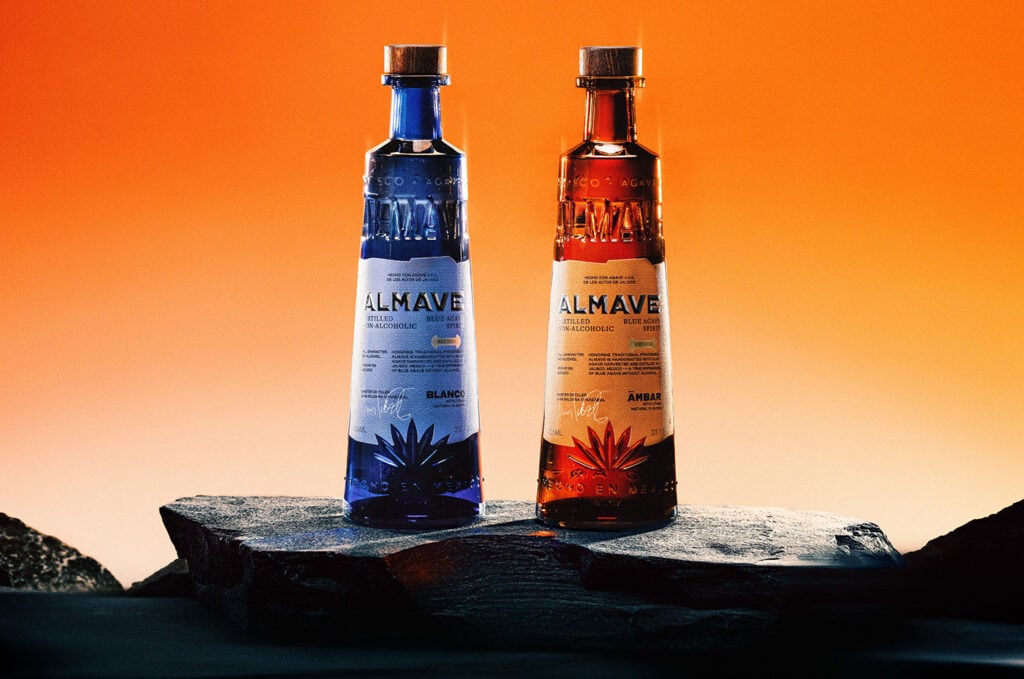
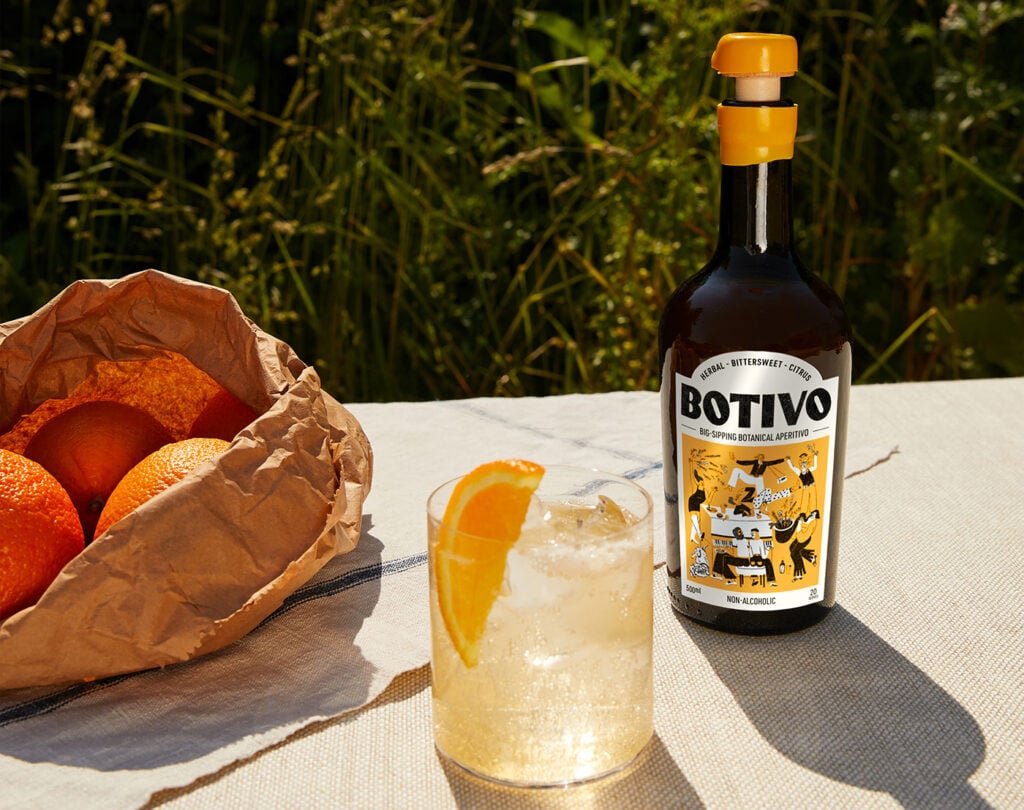
“Do I believe in non-alcoholic spirits long term? Completely. We’ve built a portfolio that reflects that conviction. Botivo and Almave are genuinely distinctive liquids that happen to not contain alcohol. They work on their own, they work alongside alcohol, they give operators real flexibility. Giffard’s non-alc range gives bartenders a quality modifier they can actually work with. These are not trend vehicles. They are serious products.”
“So the overstated part is the explosion narrative, the idea that non-alc spirits are about to reshape the market the way gin did. I don’t see it, not at that pace. What I do see is sustained, meaningful growth for the brands that have genuinely cracked the liquid. That is a very different thing and it is the only version of this category worth backing.”
We’re always interested in hearing about new launches, producer stories, category insight, venue news, and trade ideas worth sharing. If you’ve got something our buyers, bartenders, retailers, or drinks industry readers should know about, get in touch by emailing content@masterofmalt.com.