The whisky dive bar. There’s a concept.
Low lighting and cold Highballs. The heat of food and conversation. Every bottle is open. A bartender gets irritated by the small plates colonising their bar top, but still wants to recommend a dram. One they drink, not one drilled on a sales script.
It’s an institution largely missing from Britain. But its spirit can be found in Japan’s izakayas. Places built around an idea: people are here to spend time together. The drink should help.
MITSU in Shoreditch is having a go at bringing izakaya thinking to London. But it’s Shoreditch. There is robata cooking, a private listening room and enough expensive audio equipment to make a vinyl enthusiast chew through their tote bag with envy. An £18 set lunch is hardly daylight robbery by London standards, and accessible hospitality need not mean accepting bad food. Still, it is firmly not a dive bar.
After visiting during its partnership with Suntory Toki Whisky and Technics, I found myself longing for a more informal, useful future for whisky in bars. What can we borrow from Tokyo nightlife without reducing it to neon signs and a playlist called Lo-Fi Samurai Beats?
What makes a dive bar?
Dive bars are among the most egalitarian institutions in hospitality. No matter which cocktail bar you work in, which lists you make or how many tiny metal trophies you collect, there is a good chance everybody ends up in the same bar after closing. Some call it a dive. Some call it the local.
The name has to be earned. A venue cannot install a flickering sign, scuff a few stools and declare itself a dive bar. There’s a difference between low-key and low-effort. A proper dive bar may be inexpensive and informal, but the good ones care deeply about the details.
They become local landmarks. Its character comes from the people behind the bar, the people sitting at it and the thousand minor accommodations made between them.
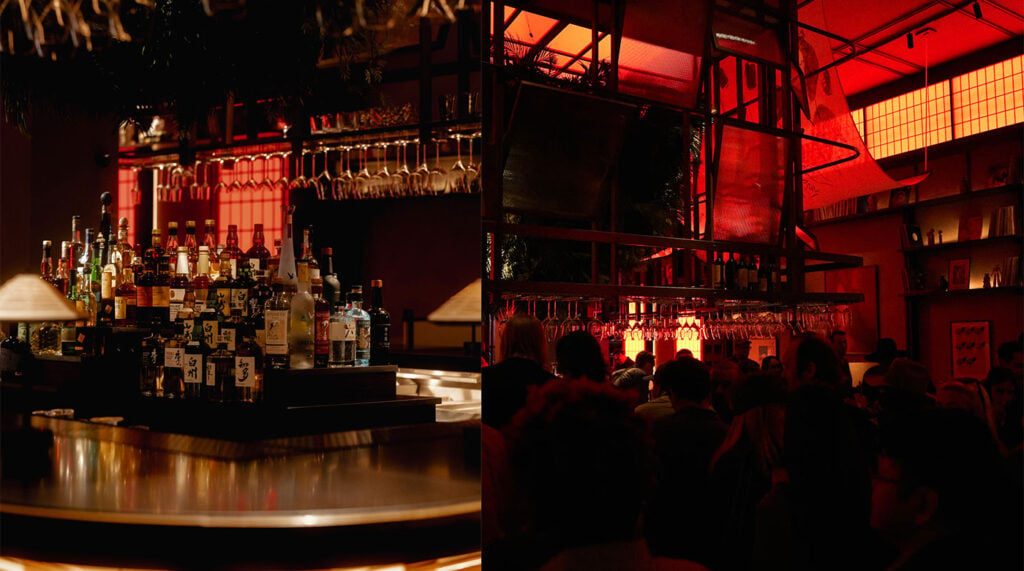
MITSU: There’s a lot to recommend about it.
My kingdom for a whisky dive bar
The measures are generous or, failing that, honest. The music is good. The lighting forgives us all. The bartender knows the regulars and, at the very least, tries to pretend they like them. They might not remember your order, but they’ll remember that ridiculous shirt you wore and feel entirely comfortable ripping the shit out of you for it.
Their importance is difficult to measure until new owners replace the sign and fuck the whole thing up. They see a drinks list to “premiumise” and regulars occupying tables that could be sold to someone willing to pay £17 for a clarified Milk Punch. Soon the room is cleaner. Soon the room is dead.
Britain has pubs, cocktail bars, whisky bars and hotel lounges containing bottles never to be finished. What we have rather less of is a casual, democratic whisky culture. Somewhere you can order a cold Highball, eat something hot and sit with friends. A good dive bar of any kind is not easy to find these days. We used to be a country.
The izakaya: Japan’s whisky dive bar?
The Japanese izakaya offers a useful parallel. It is not simply a Japanese dive bar. It has its own history and conventions, with food playing a much more central role. Flattening the two together would be lazy. But the two share an important quality: neither treats drinking as a formal performance.
I recently interviewed whisky writer Dave Broom about his book, The Japanese Way of Whisky (2025). He has spent decades documenting Japanese whisky and drinking culture. There’s a section on izakayas that captured my imagination.
Broom sees a clear gap between the Japanese venues Britain has imported and the everyday drinking culture it has largely left behind.
“I love the top-end Japanese bars in London and the fact that you’re getting amazing sushi restaurants, and everything about the cuisine and drinks service is at this elevated level,” he says.
“But at the same time, I would love there to be more izakayas. Wouldn’t it be great to walk into a bar, ask for a Highball, get a frozen half-pint mug and just sit there with your friends and have snacks?
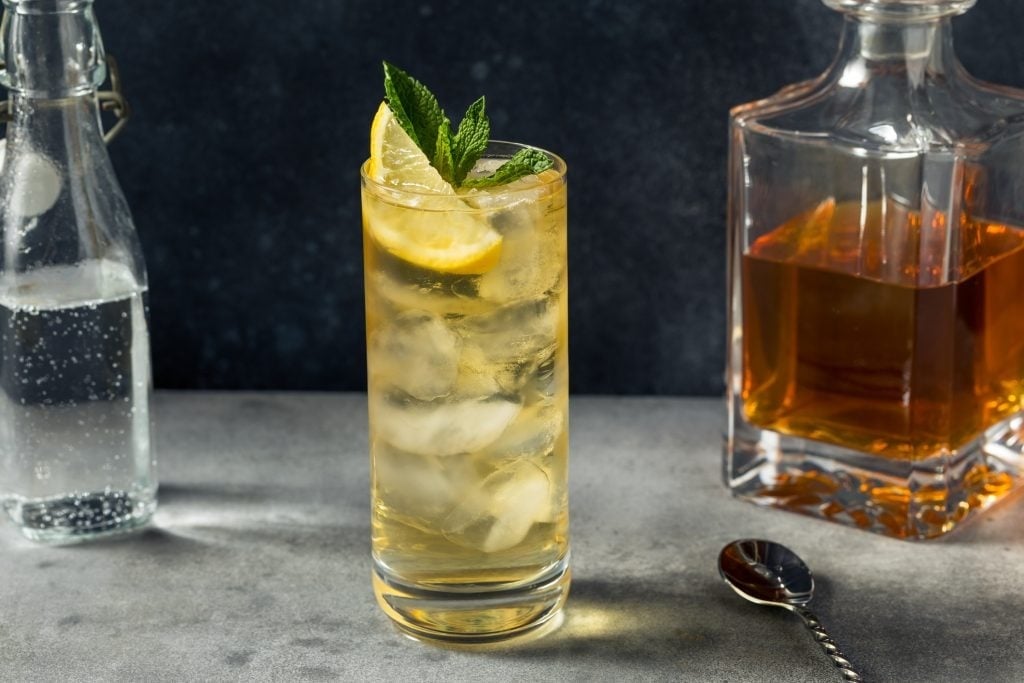
The humble Highball deserves a worthy home
Stop telling people how they should drink
Japanese whisky endured roughly 25 years of decline after the domestic market peaked in 1983. The breakthrough came when producers paid attention to what younger drinkers already enjoyed. Shochu Highballs offered a clue, a cold, carbonated, affordable drink suited to food.
“It [Japanese whisky] was in a bad place,” Broom says. “It had been in decline for 25 years. One of the tactics during that slump was to make the spirit lighter and take the colour out. It took a generation for things to change, and a lot of it came from picking up on what that younger generation was beginning to drink, such as shochu Highballs.
“It’s a great example of an industry being willing to ask, ‘What are people drinking?’ rather than telling them, ‘This is what you should drink.’”
The successful brands tend to meet drinkers where they already are. Jameson and ginger helped make Irish whiskey an accessible long drink in the United States. Jack Daniel’s did not become one of the world’s biggest whiskey brands by objecting every time somebody added cola.
“It needs smart thinking,” Broom says. “It needs people going out to bars and restaurants. Retailers speaking to customers, finding out what they want and asking how we can deliver it.”
The manifesto
One line stands out more than any in the Broom interview:
“More Highballs on tap. That’s what I say.”
There’s the manifesto.
The key is in simplicity. And simplicity does not mean a lack of care. A good Highball relies on cold glassware, a regularly cleaned ice machine, and consistent proportions. A house pour chosen because it tastes good, not because a supplier paid for its place on the speed rail.
Making something look effortless tends to require effort. The dive bar is low-key, not low-standard. A whisky dive bar would require the same judgement. It should not have everything. It should have the right things.
A dependable blend. A good-value bourbon. Something smoky. An Irish whiskey. A house Highball whisky. A few bottles for the regular who wants to explore. They should be able to bring their own for a small corkage fee, as long as they share. Perhaps something peculiar under the bar that only appears after midnight. Whisky needs editing as much as it needs range.
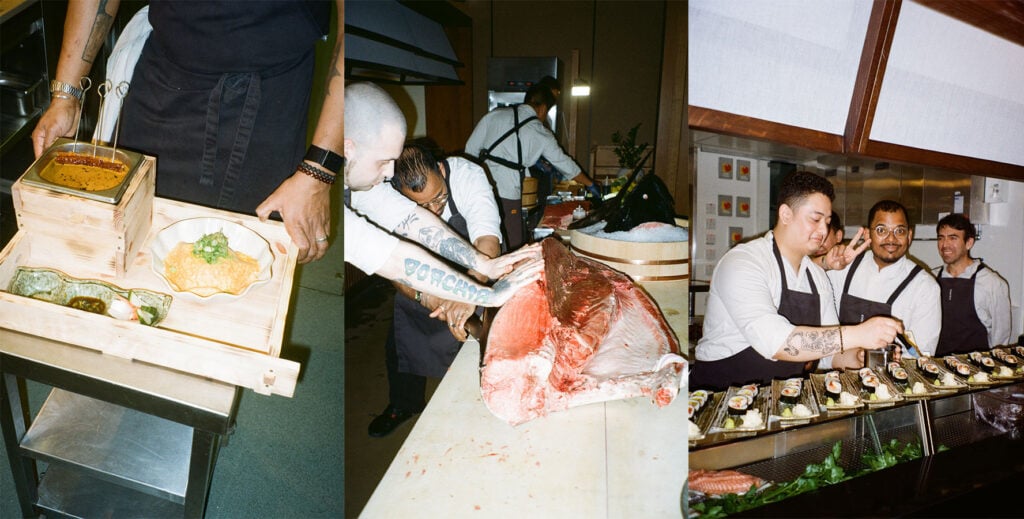
The average dive bar doesn’t quite have a menu like this…
Whisky needs ordinary occasions
The boom in premium whisky has created beautiful bars, extraordinary lists and a level of product knowledge that would have been unimaginable a generation ago. It has also deepened the temptation to view whisky as an object of reverence.
That leaves rare bottles sitting in cabinets, collecting a kind of time whisky was never designed to measure. Inert and untouched. The prices rise. Men with strong opinions about secondary-market values describe purchases as their whisky journey. Prices rise. Younger drinkers are elsewhere ordering something colder, longer and less burdened by homework. Prices rise.
The answer is not to abandon premium whisky or pretend expertise does not matter. It is to create more ordinary occasions for drinking it.
Whisky with lunch. After work. Whisky with soda, ice and food. Thinking beyond the neat pour. A short Highball menu that gives several whiskies clear roles without requiring an encyclopaedic back bar. Draught or pre-batched Highballs can improve speed and consistency. And food pairings that don’t need some obscene specialist equipment to prepare. Salt, fat, smoke and spice already know what to do with whisky.
Add music, some of that all-important forgiving lighting (though just make sure that you can read a menu) and prices real people can pay. Somewhere guests don’t feel they are occupying a table against the clock.
MITSU, Toki and the casual whisky occasion
MITSU describes itself as a modern izakaya and nightlife destination. In August, it became one of the venues hosting TOKI-O Nights, a wider series from Suntory Toki Whisky and Technics bringing together a dedicated Toki Highball menu, a mercifully private karaoke room, DJ sets, and late-night eating. Drinks can become dinner. Dinner can become dancing and an overly confident attempt at Total Eclipse of the Heart.
There is also an unofficial experiment taking place in MITSU’s listening room, where guests can taste Toki Black while exploring a hand-picked record selection through Technics headphones. Does whisky taste different when the soundtrack changes? Can oaky depth go deeper with a pounding bass line? Will a particularly crisp hi-hat improve a Highball? These are the sort of questions the research community has ignored for too long.
MITSU’s imitation of a Japanese backstreet bar is raucous fun. It applies some of the izakaya’s operating logic to London: whisky as a refreshing accompaniment to food, music and company. Yet it remains a polished Shoreditch restaurant with Shoreditch prices, not a neighbourhood boozer.
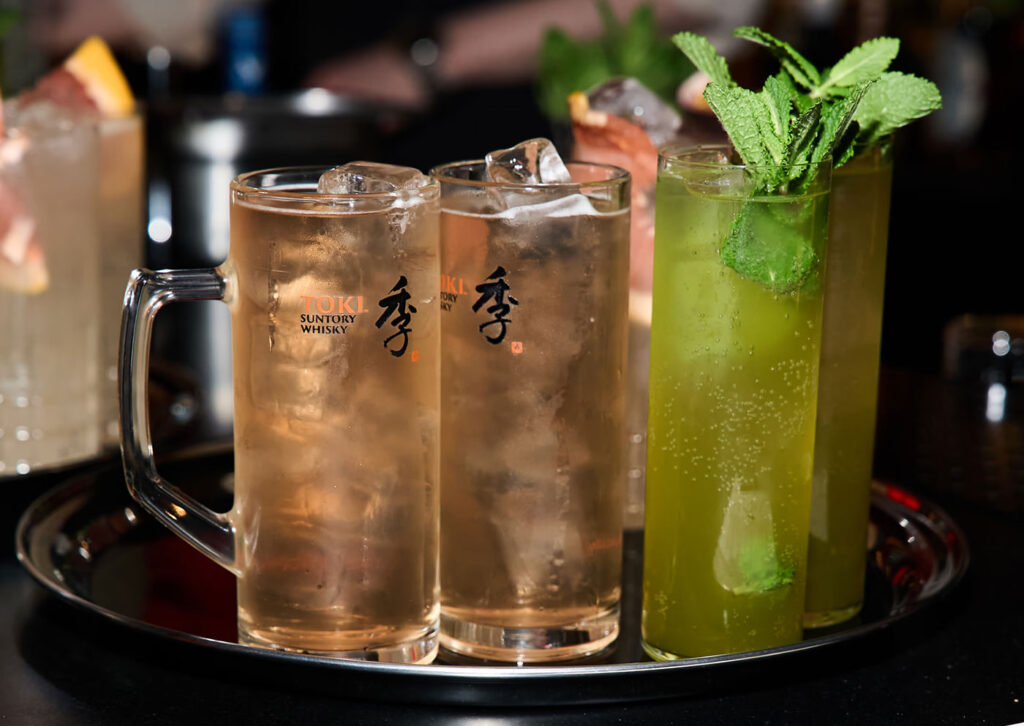
Toki Highballs. You had me at Toki Highballs.
Could the next whisky trend start here?
Dive bars keep whisky grounded because they remind us what it is for.
Drinking.
The next important whisky trend I want to see is not something that happens to the spirit, but a movement around it. For it. I want venues that make whisky easy to order, affordable to revisit and relevant to the way people already spend their nights.
MITSU is not the whisky dive bar Britain has been waiting for. It is shinier, louder and rather better equipped for charcoal grilling. How faithfully it recreates Tokyo nightlife, I couldn’t say. I haven’t been to Tokyo. I’d really like to go. But what I yearn for is the machinery of the informal whisky occasion.
TOKI-O Nights does point towards something worth pursuing. Cold, uncomplicated Highballs. Food to share. Music. A dram. Another. One more for the road.
More Highballs on tap. That’s the manifesto.